
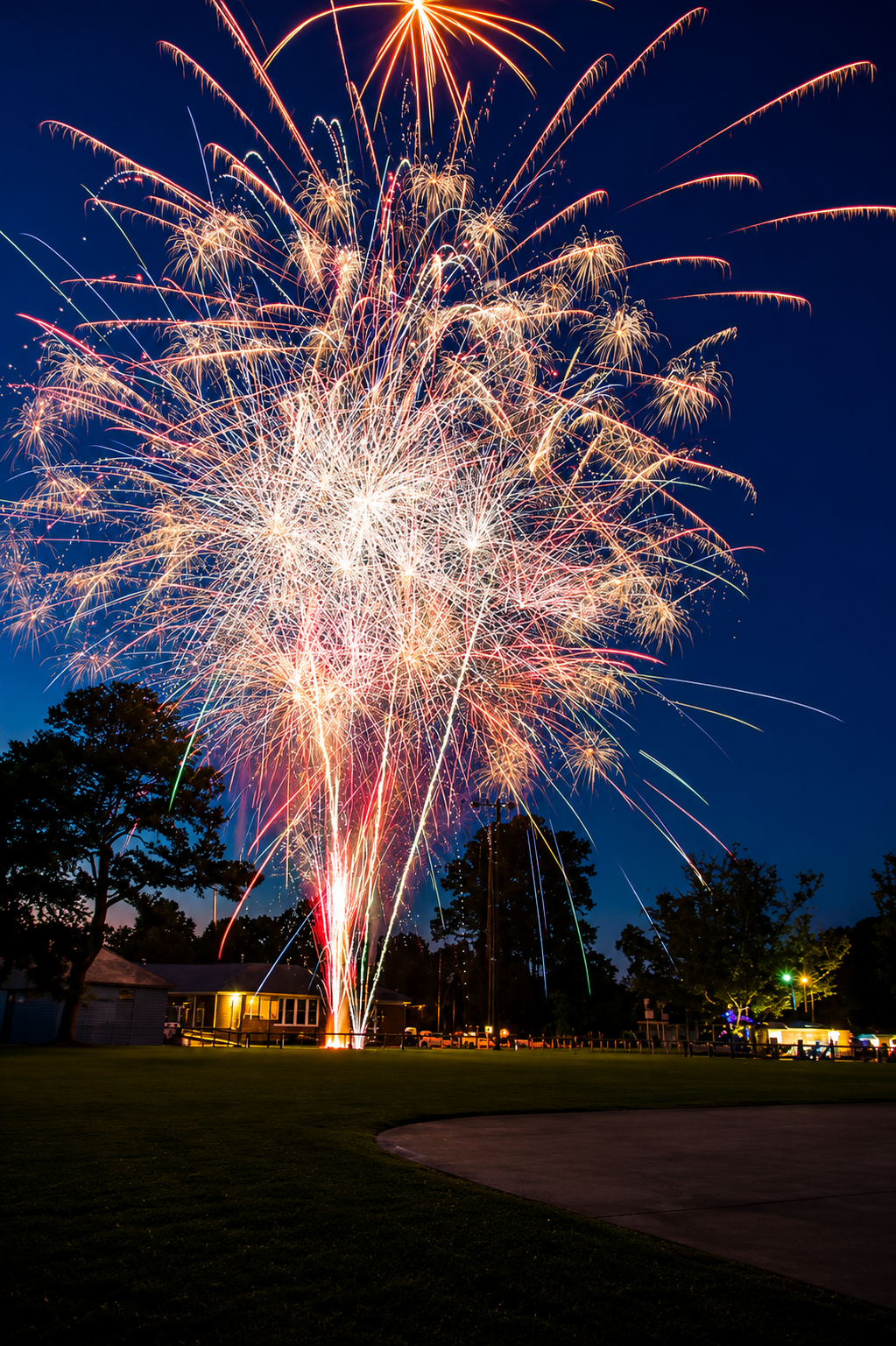
You're planning an event. You know you want fireworks. Then someone says the word "permitting," and suddenly it sounds like you need a law degree and a clipboard.
Here's the truth: fireworks permitting is not as intimidating as it sounds, but it is real work. It exists for a reason, and getting it right is the difference between a flawless finale and a cancelled show.
The good news? You don't have to do any of it yourself. A licensed display company handles the permits, the fire marshal, the site survey, and the product sourcing for you. But you should still know what's happening behind the scenes, so you can plan your timeline, answer your venue's questions, and tell a professional from a pretender.
This guide breaks down the four things every event organizer hears about but rarely understands: permitting, fire marshal coordination, site surveys, and product sourcing.
First, Why Permitting Exists at All
Fireworks are federally regulated explosives. A professional aerial shell is classified as a 1.3G explosive material, and the federal government, your state, and your local jurisdiction all have a legitimate interest in where it goes, who lights it, and what's around it when it launches.
Permitting is not red tape for its own sake. It is a paper trail that answers four questions:
- Is the operator licensed and trained?
- Is the product legal, properly stored, and properly transported?
- Is the site safe for the size of the show?
- Is the public protected if something goes wrong?
When those four questions are answered with documentation, you get a permit. When they're not, you don't. That's the whole game.
The Permitting Process, Step by Step
Here's what actually happens between "we want fireworks" and "we have a permit." A professional company runs this entire sequence on your behalf.
1. Initial consultation and site survey. Before anything is filed, the operator surveys the venue. This is often an on-site visit, but it can also be done virtually using Google Earth and similar mapping software. They measure distances, check sight lines, and identify buildings, trees, power lines, and crowd areas. This is where you find out if the show is even feasible at that location.
2. Show design and product plan. The operator designs the show and produces a product list: shell sizes, quantities, effects, and the firing sequence. This is what gets submitted for review, so it needs to be accurate.
3. Permit application to the authority having jurisdiction (AHJ). This is usually the local fire marshal for the county or city where the venue sits. The application includes the show plan, the site map, proof of the operator's ATF license, and proof of insurance.
4. Insurance. Venues and jurisdictions typically require $1 million or more in general liability coverage, with the venue and municipality named as additional insureds. The operator carries this, not you.
5. On-site inspection. Before show day, the fire marshal (or fire department) inspects the setup: mortar placement, safety distances, fire extinguishers, and the firing system. Some jurisdictions also require a post-show inspection.
6. Day-of coordination. Fire department presence, road or crowd control, and a final go/no-go call based on weather.
7. Post-show clearance. The crew sweeps the site for unexploded shells and debris before the public returns.
Who You'll Actually Be Dealing With
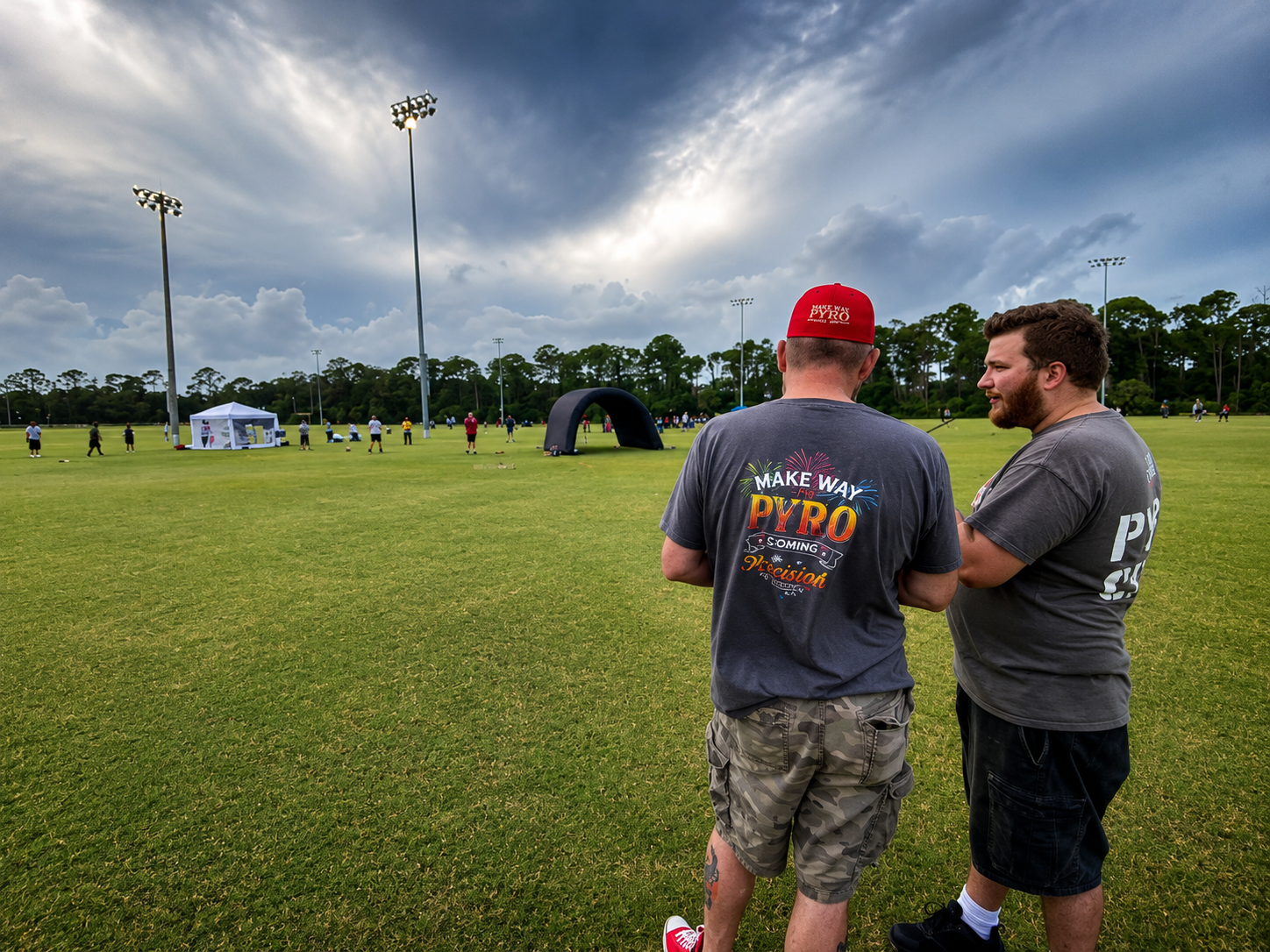
Understanding the players makes the whole process less mysterious. In most cases, you as the organizer will only ever talk to one of them: your display company.
The local fire marshal (the AHJ). The single most important person in fireworks permitting. In Florida, for example, there is no state-level pyrotechnician license. Each display is permitted by the local fire official who has jurisdiction over the venue. They review the show plan, verify credentials, and approve or deny the permit. Fees vary by jurisdiction: Palm Beach County, for instance, has a minimum permit fee of $600 plus $200 per hour for inspections. Your operator handles these fees and conversations.
The ATF (federal). The Bureau of Alcohol, Tobacco, Firearms and Explosives regulates who can buy, store, and transport 1.3G display fireworks. A professional operator holds a federal explosives license, typically a Type 54 "User of Explosives" permit, which requires a background check, an ATF-compliant storage magazine, and a federal inspection.
Your state. State rules layer on top of federal and local ones. Florida's Division of State Fire Marshal sets the framework but delegates display permitting to local fire officials. Other states have their own structures.
The Coast Guard (for barge and water shows). Fireworks launched from water, a barge, or a dock near a navigable waterway can require Coast Guard coordination, including a marine safety zone around the launch site.
The venue. Stadiums, resorts, and attractions have their own insurance requirements, access schedules, and safety protocols. Your display company coordinates with them directly.
The takeaway: you hire one operator, and they carry the burden of coordinating with all of the above.
Site Surveys and Safety Distances
The size of your show is limited by the size of your site. That's a hard rule, not a preference.
Every display is built around a calculated safety zone based on the diameter of the largest shell in the show. These distances follow NFPA 1123, the national code for outdoor fireworks displays:
- A 4-inch shell requires roughly 280 feet of clearance.
- A 6-inch shell requires more than 420 feet.
The operator maps this on a site plan, verifies it with the fire marshal, and physically clears the area before the show. Wind direction matters too. If wind shifts toward the crowd, the show is delayed, moved, or called.
This is why a company can't just "bring bigger shells" to a small venue. The site dictates the show, which is exactly how it should be.
Product Sourcing: Where Professional Fireworks Actually Come From
Here's a part of the business most people never see: professional fireworks are not sitting on a shelf in a warehouse anyone can walk into.
Professional display fireworks are classified as 1.3G, a federally regulated explosive. You cannot buy them without a federal explosives license, and you cannot store or transport them without an ATF-compliant magazine and proper placarding.
Consumer fireworks, the ones sold at roadside tents, are 1.4G. Here's the part most people get wrong: a professional show isn't built entirely from 1.3G. Operators routinely mix in consumer product, and a good deal of 1.4G is professional-grade. Close-proximity effects and "pro line" product live in the 1.4G class, purpose-built for the tight, crowd-near work that indoor and close-prox shows demand. The classification isn't a measure of quality. It's a measure of hazard class and the safety distance it requires.
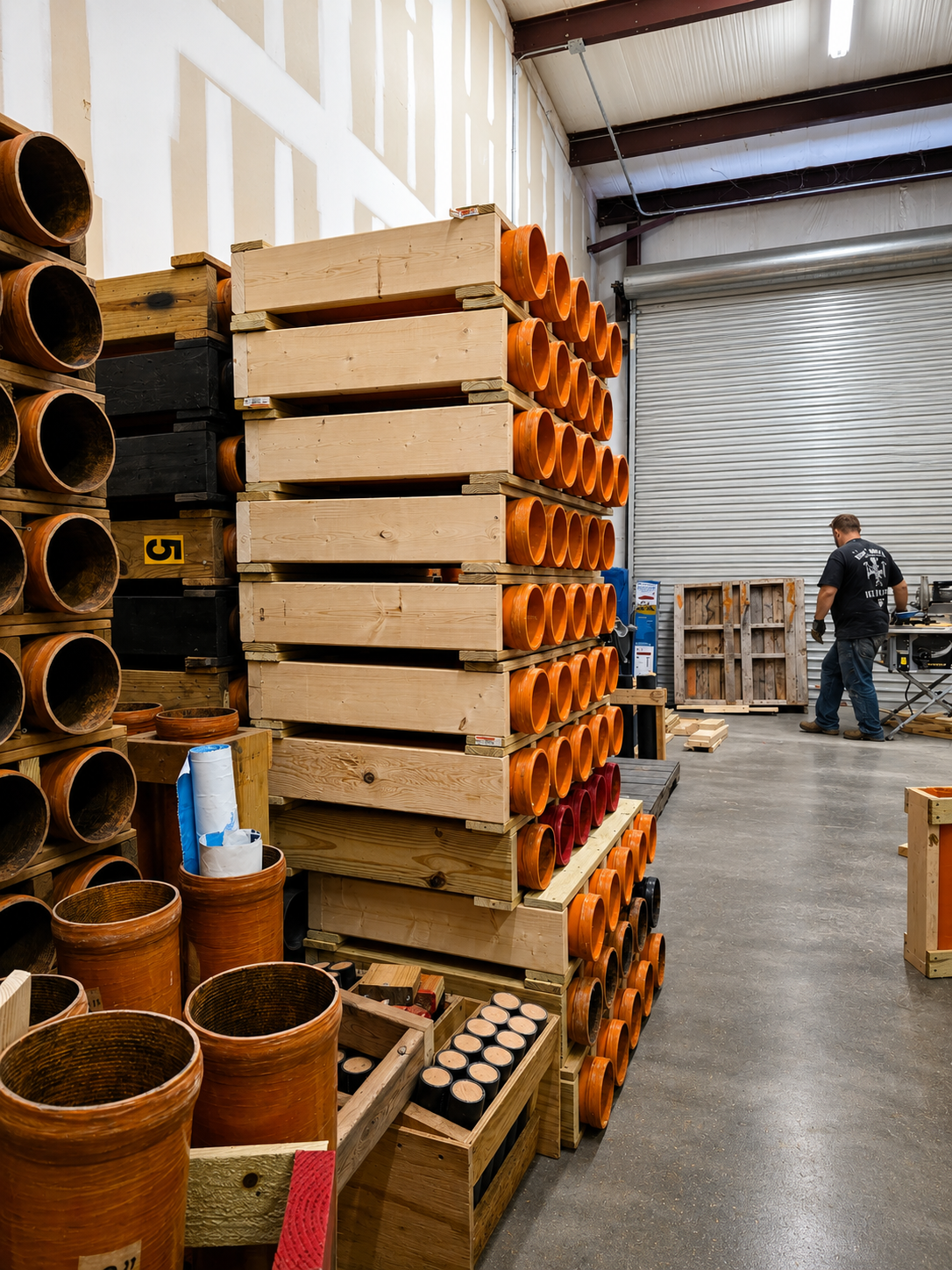
A licensed operator sources product from licensed importers, manufacturers, and distributors. It arrives at a compliant storage magazine, is inventoried and tracked, and is transported to your venue under DOT regulations. Every shell is inspected before it goes into a mortar tube.
The reason this matters to you: it's why you can't (and shouldn't) just "buy the fireworks ourselves and hire someone to light them." The sourcing, storage, and transport are all part of the license.
Logistics: The Part Nobody Thinks About
Permits and safety get the attention, but logistics is where shows live or die.
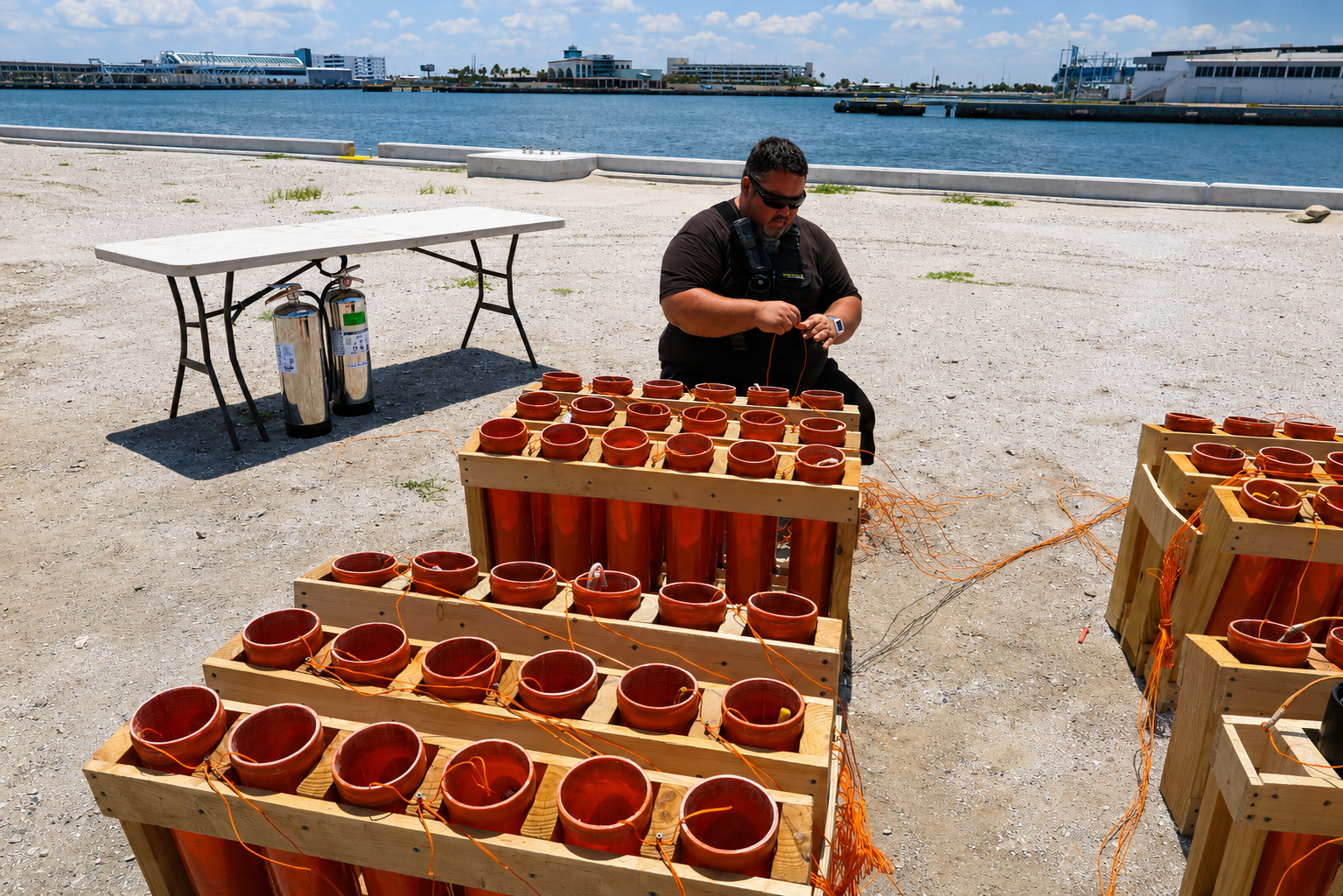
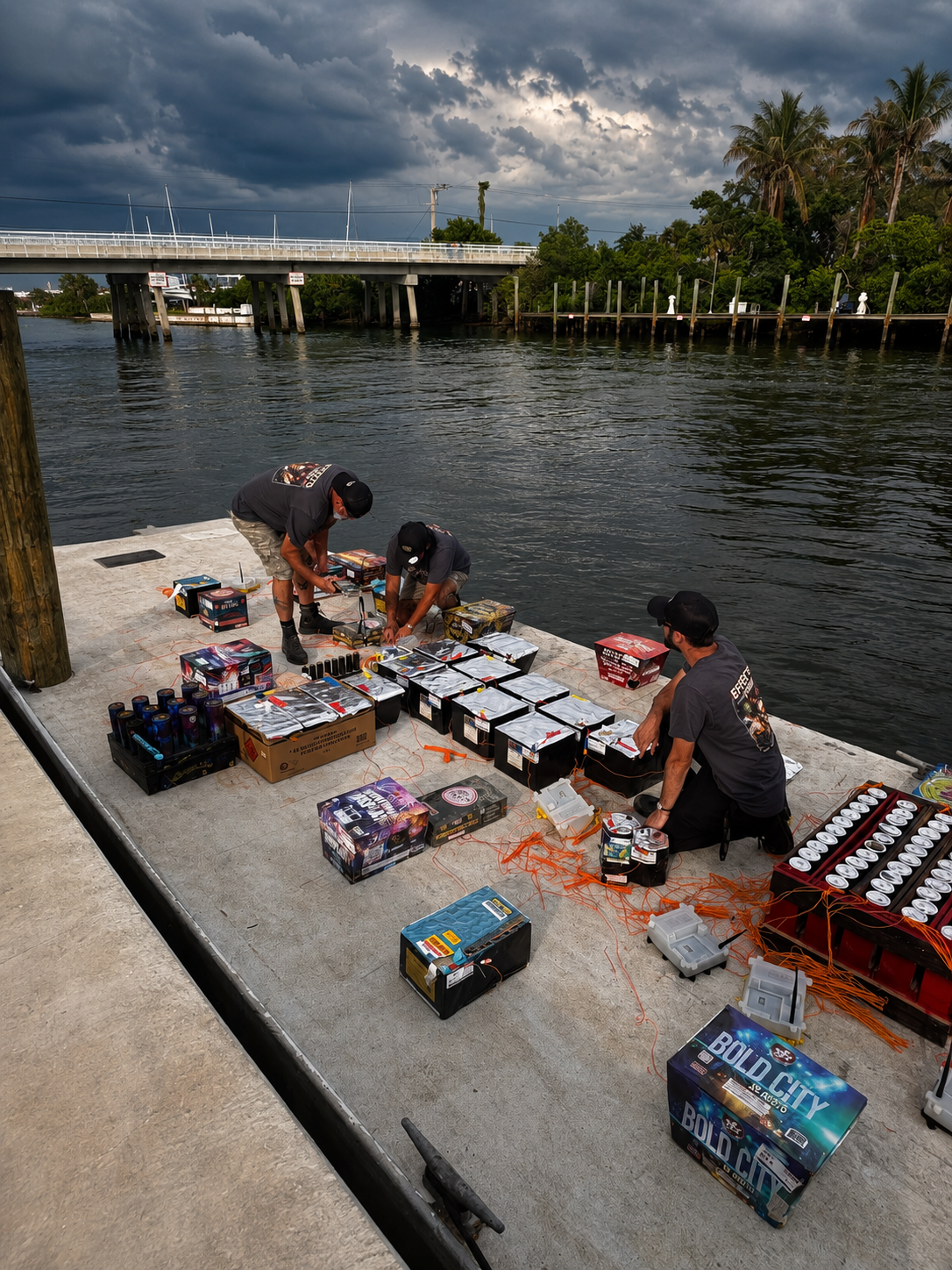
A professional display requires transporting product and equipment to the site, building mortar racks, wiring every shell to an electronic firing system, and testing before the first shot. After the show, everything comes back down, the site gets swept, and the equipment returns to the shop.
For a barge show, add marine logistics: loading the barge, securing racks, and coordinating with the Coast Guard. For a stadium show, add field access windows and coordination with game operations. For a rooftop show, add structural weight limits and close-proximity product selection.
The timeline is just as important as the task list. Load-in for a major show can start a day or more before the event. If the venue doesn't provide access until two hours before showtime, that changes what's possible.
Weather and the Go/No-Go Call
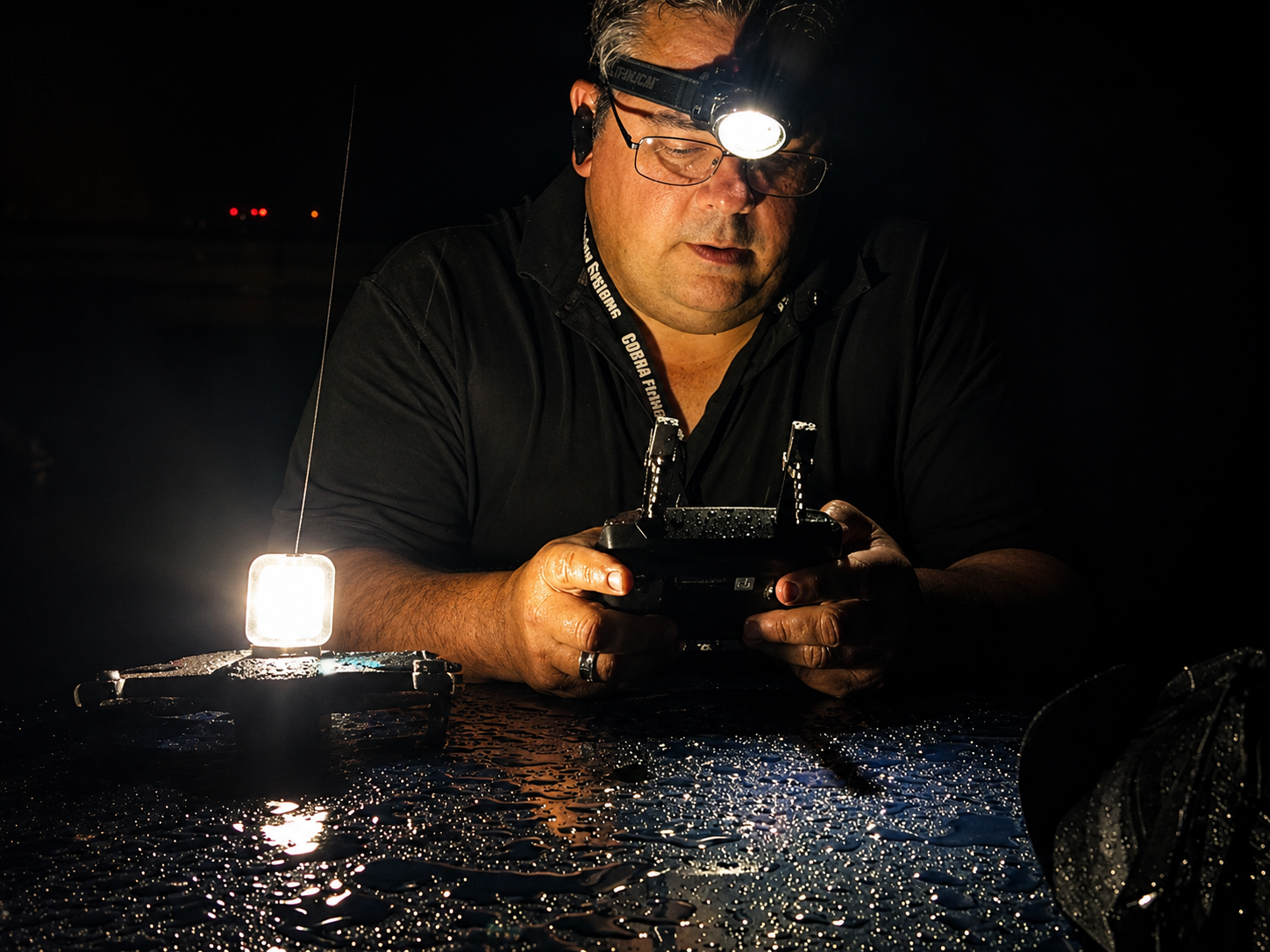
No permit replaces a human judgment call on show day. Wind, humidity, lightning, and rain all factor into the final decision.
Professional operators monitor conditions before and during the show. If wind pushes debris toward the crowd, the show holds or adjusts. If lightning moves in, the show stops. This is a safety protocol, not a suggestion, and it's built into every permit and every contract.
The organizer's job is simple: understand that a delayed or cancelled show is a safety outcome, not a failure. A professional will never launch a show they shouldn't.
How Far in Advance Should You Start?
This is the question we get most often, and the honest answer is simple: as soon as possible, and ideally 30+ days out.
Permits usually require a 30-day submission window. That's the norm, not a hard rule, because some AHJs will accept a rush. A rush is often doable, but it may come with additional fees on their end, and it tightens your window for scheduling crew, product, and insurance certificates.
The earlier you reach out, the more options you have for dates, product, and crew. Last-minute can work in some cases, but 30+ days out is the sweet spot that keeps everything smooth.
What's Actually on You (It's Less Than You Think)
When you hire a licensed display company, here's your actual to-do list:
- Provide the venue and the date (or let us help you lock them in).
- Confirm the event insurance requirements with your venue.
- Give the operator access windows for load-in and load-out.
- Enjoy the show.
That's it. The permits, the fire marshal, the site survey, the product, the transport, the setup, the safety zone, and the cleanup are all on the operator.
The Bottom Line
Fireworks permitting and logistics are not a mystery. They're a defined process with a clear sequence: survey the site, design the show, file the permit, verify the credentials, inspect the setup, and make the go/no-go call.
You don't need to become an expert. You need to hire one.
A professional operator turns a regulatory maze into a single point of contact, and hands you back the only thing that matters: a safe, permitted, spectacular show your guests will talk about for years.
About Imperial Pyro and Special Effects
Imperial Pyro and Special Effects is a multi-state professional fireworks and special effects company based in Palm Coast, Florida. We're fully licensed, insured, and permitted across Florida, Virginia, and beyond, with experience ranging from community Fourth of July displays to stadium pyrotechnics, barge shows, theme park installations, weddings, and concert effects.
Founder Jack Lambert earned his first full fireworks permit at LEGOLAND Florida Resort, where he was on the park's opening team. That's where the permitting discipline behind every show we run today began.
Every show we run includes:
- ATF-licensed operators and trained crew
- Full permitting and fire marshal coordination
- $1M+ liability insurance
- Pre-show site surveys and NFPA 1123 safety zone planning
- Weather monitoring and go/no-go protocols
- Post-show site clearance
Planning an event? We'll handle the permits, the safety, and the spectacle. You enjoy the moment.